Okaloosa public records include court files, property reports, marriage details, arrest data, tax files, and many other county records stored by local government offices. Many residents search Okaloosa public records in Florida to check ownership history, review court activity, confirm legal filings, or locate public document records connected to family, property, or business matters. Florida public records laws support open record review, which helps people review government records from different county agencies. Public records Okaloosa County searches often include civil court cases, criminal records, probate matters, land deeds, permits, and traffic case details. These county records help residents, reporters, researchers, employers, and property buyers find trusted public information from official local sources.
Florida transparency laws allow many government records to stay open for public review through county and state departments. Okaloosa County agencies maintain large databases that contain property assessments, court filings, inmate records, marriage licenses, voter files, and tax information linked to public activity. Many users search Okaloosa public records before buying property, checking court history, verifying legal documents, or researching local background details. Public document searches continue to grow since online county records help people find information faster without visiting multiple offices. Public records in Okaloosa County databases support record searches connected to legal matters, real estate research, genealogy searches, financial checks, and public transparency data across Florida.
What Are Okaloosa Public Records?
Okaloosa public records are official documents created or stored by local and state government agencies in Okaloosa County, Florida. These records support public information rights under Florida law and help residents review county activities, court files, property data, and other government records. Florida’s public records system supports openness in government operations. Under the Florida Sunshine Law, many official documents remain open for public review unless state law blocks release for privacy or security reasons.
Public records include paper files, digital databases, emails, maps, audio recordings, court filings, and archived materials. County offices create and store these records during daily operations. Many agencies now provide online search systems that make record requests faster and easier.
Types of Okaloosa Public Records
Residents often search for different categories of official documents. Common examples include:
- Court records
- Property records
- Marriage and divorce records
- Business licenses
- Criminal records
- Traffic citations
- Tax documents
- Voter registration files
- Building permits
- County meeting minutes
These records support transparency laws by allowing the public to review government actions and county operations.
| Record Type | Agency Commonly Responsible |
|---|---|
| Court Records | Clerk of Court |
| Property Records | Property Appraiser |
| Tax Records | Tax Collector |
| Marriage Records | Clerk of Court |
| Criminal Case Files | Local Courts & Law Enforcement |
| Building Permits | County Development Services |
Agencies That Maintain Government Records
Several county and state agencies manage Okaloosa public records. Each office handles a different group of county archives and public files.
Record custodians include:
- Okaloosa County Clerk of Court – court cases, marriage records, official documents
- Okaloosa County Property Appraiser – ownership records and parcel details
- Okaloosa County Tax Collector – tax payments, vehicle records, business taxes
- Sheriff’s Office – arrest reports and incident reports
- Florida Department of Health – birth and death certificates
Many agencies provide searchable databases for public use. Some records remain free to view online, though certified copies often require payment.
Public Rights Under Florida Sunshine Law
Florida maintains some of the strongest public information laws in the country. The Florida Sunshine Law gives residents the right to inspect many government records created by public agencies. State law requires agencies to respond to valid public records requests within a reasonable time. Still, certain records stay restricted. Examples include active investigations, juvenile files, and some personal identification details.
How to Search Okaloosa Public Records Online
Searching Okaloosa public records online starts with official county databases and clerk portals. These systems support public records search by name, case number, filing date, and document type through a searchable database. Okaloosa County public access portals allow users to perform records lookup for court cases, property details, marriage records, and other official filings. Most searches take only a few minutes when the correct details are entered.
Official Okaloosa County Public Records Databases
Okaloosa County maintains multiple official online search tools for different record types. Each system serves a specific purpose, so selecting the correct portal improves search results.
Court Records Search Tool
- https://okaloosaclerk.com/court-services/search-records/
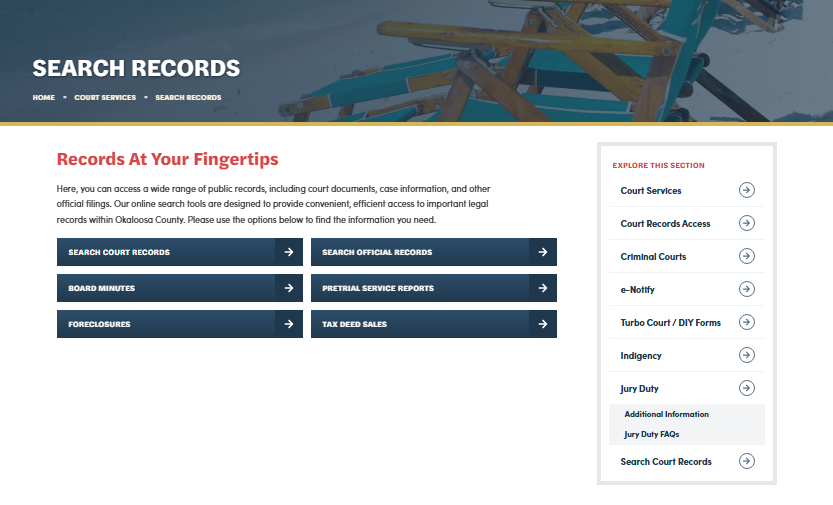
- Used for civil, criminal, probate, and traffic cases
- Supports name search and case number search
- Shows docket details and case summaries
- Useful for general public records search
ClerkQuest Case Search Portal
- https://clerkapps.okaloosaclerk.com/ClerkQuest/Cases/Search
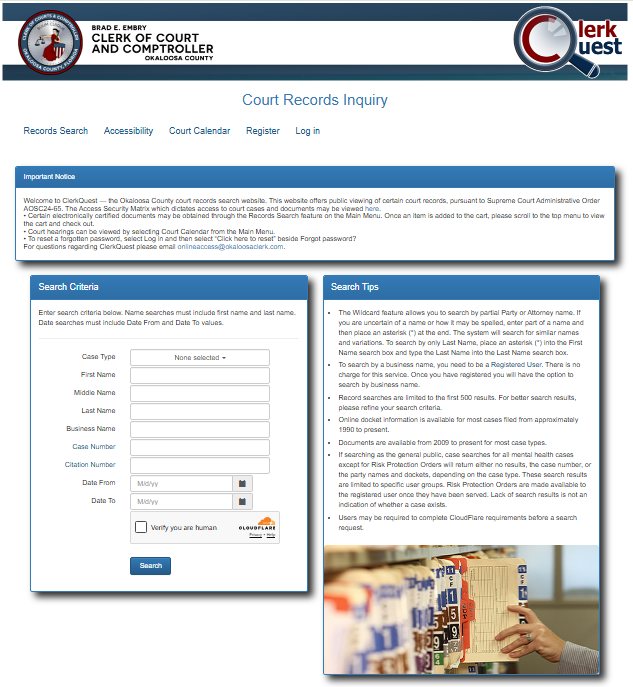
- Designed for detailed case lookup
- Supports party name and case number search
- Includes older and active court records
- Commonly used for legal records research
Court Records Access Page
- https://okaloosaclerk.com/court-services/court-records-access/
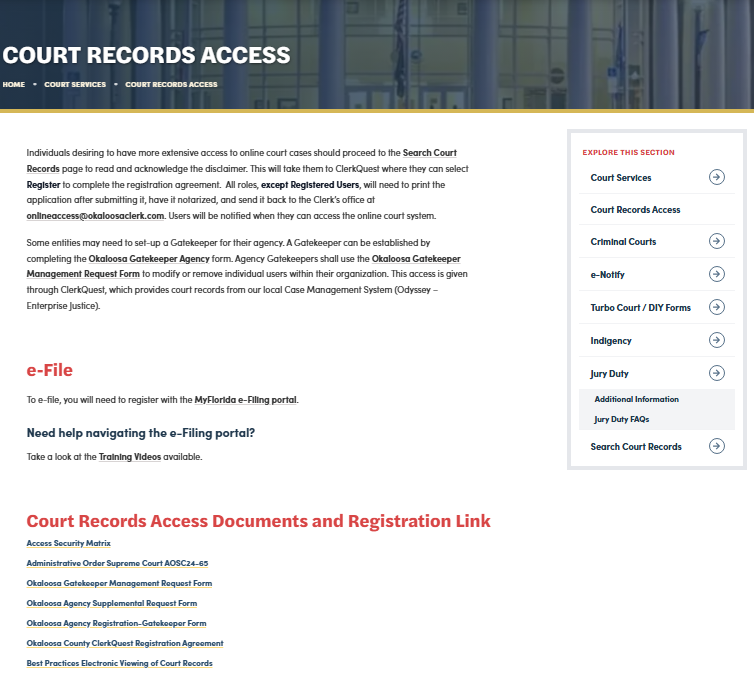
- Provides a structured public access portal entry
- May require registration for full document viewing
- Used for official document retrieval
Court Calendar Search Tool
- https://clerkapps.okaloosaclerk.com/ClerkQuest/CourtCalendar/Index
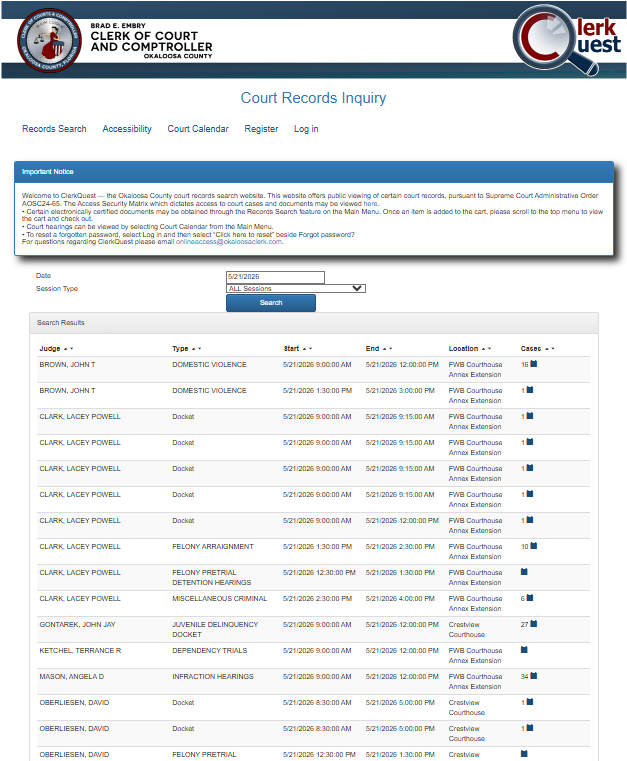
- Shows upcoming hearings and court schedules
- Search by date, judge, or division
- Helpful for tracking active court cases
Clerk Portals for Public Records Search
The Okaloosa County Clerk portal works as a main hub for public records search activities. It contains civil, criminal, probate, traffic, and family court records in a structured system.
A typical records lookup process includes:
- Opening the official clerk search portal
- Selecting the record category
- Entering required details
- Applying filters for refined results
- Reviewing available case information
The system often displays basic case data for free. Some certified copies or full documents may require payment through the portal system.
Name Search and Case Number Search Options
Okaloosa public records systems support two main search methods: name-based search and case number search. Each method works for different situations.
Name Search Method
A name search is useful when the case number is not available. Users can enter:
- Full legal name
- Last name only
- Business name
- Property owner name
Search results may show multiple entries, especially for common names. Filters help narrow down the correct record.
Case Number Search Method
Case number search provides more direct and accurate results. Each court case has a unique identifier stored in the database.
This method is commonly used by:
- Attorneys
- Court researchers
- Case participants
- Record verification users
Case number search reduces unrelated results and speeds up record lookup.
Types of Public Records Available in Okaloosa County
Public records maintained by Okaloosa County offices include court files, arrest reports, property data, marriage files, and vital statistics. Many Okaloosa County records are available through searchable databases managed by county agencies and state departments. Residents, researchers, employers, and legal professionals often review county documents for personal, legal, or historical purposes. Public archives help people review official record types linked to court activity, land ownership, criminal history, and family events.
Court Records
Okaloosa County court records contain details connected to legal cases filed within the county courts. These records often include civil cases, criminal cases, probate matters, family court actions, and traffic disputes.
A case lookup may show:
- Court filings
- Hearing dates
- Party names
- Case status
- Judgments
- Filed motions
Many public records Okaloosa County court systems maintain are searchable online through county clerk services. Users often search these files for legal research, background checks, or pending case details.
| Common Court Record Type | Details Included |
|---|---|
| Civil Cases | Lawsuits, disputes, settlements |
| Criminal Cases | Charges, sentencing, court actions |
| Family Cases | Divorce, custody, support |
| Probate Records | Wills, estates, guardianships |
| Traffic Violations | Citations and payment status |
Court records may contain scanned court filings and docket entries. Some files remain restricted under Florida privacy laws, especially juvenile or sealed records.
Arrest & Criminal Records
Okaloosa County arrest records provide booking details connected to arrests made by local law enforcement agencies. Criminal records may include charges, warrants, mugshots, inmate records, and court outcomes.
These county documents often list:
- Arrest date
- Booking number
- Criminal charges
- Bond amount
- Jail location
- Release information
Law enforcement agencies and detention centers maintain booking information through searchable database systems. Criminal history reports may contain felony and misdemeanor records tied to state or county cases.
Property Records
Property records Okaloosa County offices maintain contain information linked to land ownership, tax history, and real estate transfers. These official record types help buyers, sellers, attorneys, and title companies confirm ownership details.
Property records include:
- Deeds
- Mortgage filings
- Parcel records
- Property tax records
- Liens
- Plat maps
Parcel records often identify lot boundaries, assessed value, and ownership history. County property appraiser systems may display searchable maps connected to residential and commercial land parcels.
Marriage & Vital Records
Marriage records that Okaloosa County agencies store contain legal details connected to marriage licenses and recorded unions. Vital records include birth records, death certificates, divorce files, and certified copies issued by authorized agencies. These public archives often help people confirm identity, family history, or legal status. Certified copies may support passport requests, insurance claims, school enrollment, or estate matters.
| Vital Record Type | Typical Use |
|---|---|
| Birth Records | Identity verification |
| Death Certificates | Estate and insurance matters |
| Marriage Records | Name changes and legal proof |
| Divorce Records | Court and financial matters |
Florida law limits public release of some birth records and death certificates. Immediate family members and authorized parties usually receive full certified copies.
Agencies That Maintain Public Records
Several county agencies maintain Okaloosa County official records for public use. These offices store court records, arrest reports, property files, tax details, and health documents through organized county databases and archives.
Clerk of Court
The Clerk of Court manages many important Okaloosa County clerk records, including criminal cases, civil filings, marriage licenses, probate matters, and traffic records. This office keeps official court documents organized for public review, and many files remain searchable online through county systems. Residents often contact the clerk of court for certified copies, hearing information, foreclosure filings, and official county records connected to legal proceedings.
Sheriff’s Office
The Sheriff’s Office maintains law enforcement files and arrest records that Okaloosa County residents frequently search for online. These records may include booking details, inmate reports, warrants, accident reports, and criminal incident information connected to county investigations. Public safety records help residents verify case details, review jail information, and check custody status through sheriff’s office databases and public reporting systems.
Property Appraiser
The Property Appraiser maintains ownership data and supports the public property search system used by homeowners, buyers, and real estate professionals. Property files often include parcel numbers, assessed values, sales history, lot details, exemption status, and building information connected to residential or commercial land. The office works closely with the tax collector to support accurate taxation records and county property assessments.
Health Department
The Health Department manages certain health-related public files and helps residents request vital records that Florida agencies issue across the state. These records commonly include birth certificates, death certificates, immunization files, and other approved public health documents needed for legal or personal use. Florida law limits some vital records to eligible family members, legal representatives, or approved applicants with valid identification.
Florida Public Records Laws & Access Rights
Florida public records laws give people the right to review many government files, including court records, property files, and agency reports. Under the Florida Sunshine Law, state and local agencies in Okaloosa County must keep records open for public review unless state law blocks disclosure. Florida has some of the strongest public transparency regulations in the country. The law supports government accountability by allowing citizens to inspect or request records from public offices. Many people searching for Okaloosa public records in Florida use these laws to locate court files, arrest records, permits, meeting minutes, and land records.
Public Access Rights Under Florida Sunshine Law
The Florida Sunshine Law and the Florida Public Records Act support public access rights across state agencies. These disclosure laws apply to county offices, police departments, schools, courts, and many local boards.
Citizens can request records in several ways:
- Online record request portals
- Email requests
- Mail submissions
- In-person visits to government offices
Most agencies must respond within a reasonable time. Some records are free to inspect, though copying fees may apply. Agencies cannot deny a request without citing a legal reason under Florida law.
Public records include:
| Record Type | Common Source |
|---|---|
| Court Records | Clerk of Court |
| Property Records | County Property Appraiser |
| Marriage Records | Vital Records Office |
| Arrest Reports | Sheriff’s Office |
| Business Licenses | County Departments |
These transparency regulations help residents monitor government activity and public spending. They support open meetings, record retention, and fair public review practices.
Exempt Records and Disclosure Limits
Florida law keeps many records open, though some files remain protected for safety or privacy reasons. Exempt records are restricted under state disclosure laws and cannot be released to the public.
Examples of exempt records include:
- Active criminal investigation files
- Juvenile records
- Social Security numbers
- Medical information
- Certain victim information
- Sealed or expunged court records
Agencies must remove protected details before releasing documents. This process is often called “redaction.” For example, a police report may remain public, though private personal data could be blacked out.
Government Transparency and Citizen Rights
Florida public records laws support open government practices across Okaloosa County. Citizens have the right to request information without giving a reason for the request. In many cases, agencies cannot ask why someone wants a record.
Public transparency helps citizens:
- Monitor government decisions
- Review public spending
- Track court activity
- Verify property ownership
- Research local agencies
Strong government transparency rules help build trust between agencies and the public. For that reason, many residents rely on Okaloosa public records Florida searches to review official county information legally available under Florida law.
How to Request Public Records in Okaloosa County
Residents can submit a public records request in Okaloosa County through online portals, mail, email, or office visits. Most county departments provide record request forms, fee details, and certified copy options for court, property, jail, and government files. Public record laws in Florida allow people to request many government documents. These records may include court files, arrest reports, property deeds, marriage licenses, permits, meeting minutes, and tax records. Many departments accept FOIA requests, though Florida follows its own public records law rather than the federal FOIA system.
Online Public Records Request in Okaloosa County
Many agencies in Okaloosa County offer online document request options. This method saves time and helps users track requests more easily.
Online request steps include:
- The correct county or department website
- Complete the records request form
- Enter names, dates, case numbers, or property details
- Submit payment if fees apply
- Wait for email updates or download links
Online systems often handle:
- Court record searches
- Property document requests
- Jail and inmate records
- Building permits
- Marriage and divorce records
- Certified copies of official files
People should provide clear details in the request. Accurate information often reduces delays and helps staff locate files faster.
In-Person Requests and Mail Requests
Some residents prefer visiting county offices directly. In-person requests work well for certified paperwork or older archived files.
Common offices that process records requests include:
| Record Type | Typical Office |
|---|---|
| Court records | Clerk of Court |
| Property records | Property Appraiser |
| Deeds and liens | Recorder’s Office |
| Jail records | Sheriff’s Office |
| Vital records | Health Department |
Fees for Public Records Requests
Okaloosa County departments may charge fees for copies, research time, or certified paperwork. Costs vary based on the type of record and the number of pages requested.
Typical charges may include:
- Standard photocopies
- Certified copy fees
- Search or staff labor fees
- Large-format document printing
- Mailing costs
Some simple requests remain free if the file is easy to locate. Large requests often cost more due to staff time and file preparation.
Processing Times for Record Requests
Processing times depend on the record type and request volume. Some online files appear within minutes, though archived records can take several business days.
Several factors affect response times:
- File age
- Request accuracy
- Department workload
- Need for legal review
- Redaction of protected details
Public agencies may remove confidential information before releasing documents. Protected data can include Social Security numbers, juvenile information, or active investigation details.
(FAQs) About Okaloosa Public Records
Okaloosa public records can often be searched online through county offices, court systems, and state databases in Florida. Many records remain open to the public, though certain files stay restricted under privacy laws or court orders.
Are Okaloosa public records available online?
Many Okaloosa public records appear in online databases maintained by county and state agencies. Residents can use a public access portal to search court filings, property records, official documents, marriage licenses, and other searchable records from a computer or mobile device. Some systems allow free viewing of basic case details, though full document retrieval may require payment. Older records sometimes stay archived in paper format and may require an in-person request. Record availability depends on the agency maintaining the files and the type of information requested.
How do I request certified copies?
Certified copies usually come from the office that keeps the original document, such as the Clerk of Court or county recorder. A requester normally submits the case number, filing date, document title, or full name before paying the required fee. Many agencies accept requests online, by mail, or through walk-in service at the courthouse. Certified documents contain an official seal or stamp showing the copy matches the original file. Processing times vary based on record type, office workload, and whether staff must locate archived paperwork.
Are arrest records public in Florida?
Florida law allows public inspection of many arrest records maintained by law enforcement agencies and county systems. Public databases may show booking dates, charges, bond amounts, mugshots, and arresting agencies through searchable records systems. Some records remain unavailable if they involve active investigations, juvenile matters, or sealed court cases. Expunged files do not normally appear in standard public access portal searches. Residents often use these online databases for background research, court case reviews, and public safety information.
What records are confidential?
Florida public records laws support transparency, though certain files remain protected for legal or privacy reasons. Confidential records may include adoption files, juvenile court cases, medical details, Social Security numbers, financial account information, and some victim records. Courts may seal records after legal review in qualifying situations. Agencies can redact sensitive information before releasing documents for public inspection. Redacted files still allow document retrieval of non-confidential sections that remain open under Florida law.
How long does a records request take?
The time required for a records request depends on the document type, office workload, and the amount of research involved. Simple searches through online databases may produce results within minutes, though large requests often require several business days. Requests involving archived files, legal review, or redactions usually take longer to complete. Agencies may contact the requester if more information is needed before processing begins. Accurate details such as names, dates, and case numbers often help speed up document retrieval.