Okaloosa criminal records refer to official documentation of criminal case activity recorded within Okaloosa County, Florida. These records include arrest entries, filed charges, and final court outcomes recorded through county law enforcement and court systems. They are frequently used for background check purposes, criminal history verification, and review of court case activity tied to an individual. Each record reflects specific case details such as booking information, charge descriptions, and case status updates, which may include convictions, dismissals, or pending matters. As part of public record systems, these files support transparency in criminal justice reporting and help confirm legal history tied to local court proceedings and law enforcement activity.
Criminal case files in Okaloosa County are commonly reviewed by employers, property managers, legal professionals, and individuals checking personal records. A criminal history report from Okaloosa County may show differences between an arrest record and a conviction record, since an arrest only reflects detention by law enforcement, while a conviction reflects a final court decision after case processing. Court outcomes may vary based on evidence, hearings, and legal rulings, which are documented within the official record system. These records also play a key role in background check evaluations, where prior criminal activity, case status, and sentencing details may be reviewed for verification purposes.
What Are Okaloosa Criminal Records?
Okaloosa criminal records are official documents that show a person’s interaction with the local criminal justice system. These records come from court databases and law enforcement reporting systems. They reflect arrest history, case activity, and final court decisions tied to criminal case files in Okaloosa County.
Definition and Record Structure of Okaloosa Criminal Records
Okaloosa criminal records refer to official criminal case files stored in a county court database and related law enforcement systems. They track a person’s offender records from the first arrest report through the final court action. These records form a structured timeline of legal events. Each entry connects to a specific case number. The record usually follows a consistent format used by courts and police agencies.
Structural elements include:
- Case identifiers linked to court records
- Arrest details from law enforcement agencies
- Charge descriptions tied to statutes
- Court activity logs showing hearings and filings
- Outcomes recorded after judgment
These details help create a complete criminal case profile. In many situations, records also connect multiple cases involving the same person. This creates a broader view of criminal history within the Okaloosa County systems.
Types of Okaloosa Criminal Records
Okaloosa criminal records are grouped by offense severity. The two main categories include felony and misdemeanor records. Each category reflects different levels of legal violations and penalties.
Felony records
- Severe offenses such as violent crimes or major theft
- Longer sentencing periods
- Stored permanently in offender records databases
Misdemeanor records
- Lesser offenses like petty theft or minor assault
- Shorter jail terms or fines
- Still recorded in court databases and arrest history logs
Felony cases often remain visible in background record searches. Misdemeanor cases may also appear, depending on reporting rules and case status.
How to Search Okaloosa Criminal Records
Okaloosa criminal records can be searched through official court and clerk systems using name-based lookup or case number tools. A structured case lookup method helps users view charges, hearing status, and related filings from the Okaloosa court system. Most Okaloosa criminal records are stored in the clerk’s database and can be reviewed through a public records search interface.
Name-Based Search for Okaloosa Criminal Records
A name-based search is the most common way to begin a public records search for criminal cases. It works when only a person’s full name is available.
Steps process:
- The Okaloosa Clerk’s court records portal https://clerkapps.okaloosaclerk.com/ClerkQuest/Cases/Search
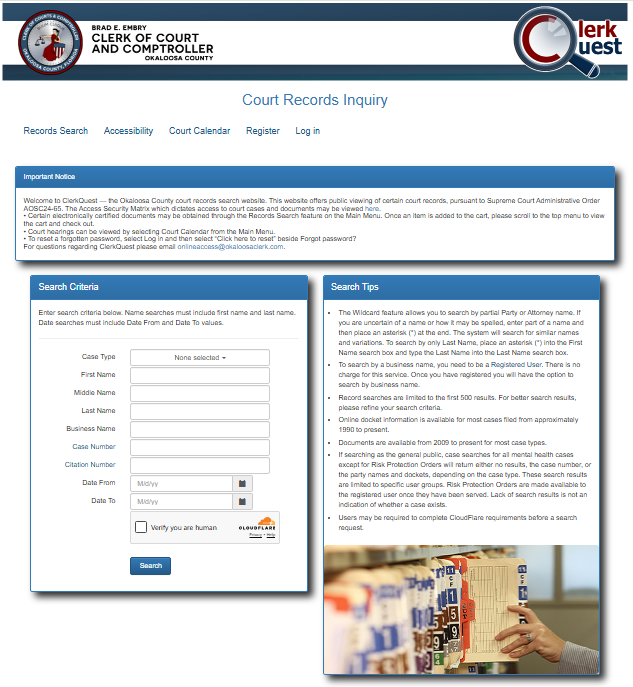
- Select the case lookup or search option
- Enter full legal name (first and last)
- Add the date of birth if the system allows filtering
- Select “Criminal” or “Court Case” category
- Review the matching results list
Search results may show:
- Arrest records linked to charges
- Court hearing schedules
- Case status updates
- Filing history tied to Okaloosa criminal records
Name-based search supports general court system search needs, but may show multiple results for common names. Cross-checking details helps record verification before using any record.
Case Number Search and Court Database Usage
Case number search gives more precise results than name-based lookup. Each criminal case in Okaloosa receives a unique identifier inside the court database.
Steps for case number search:
- The Okaloosa County court https://okaloosaclerk.com/court-services/search-records/
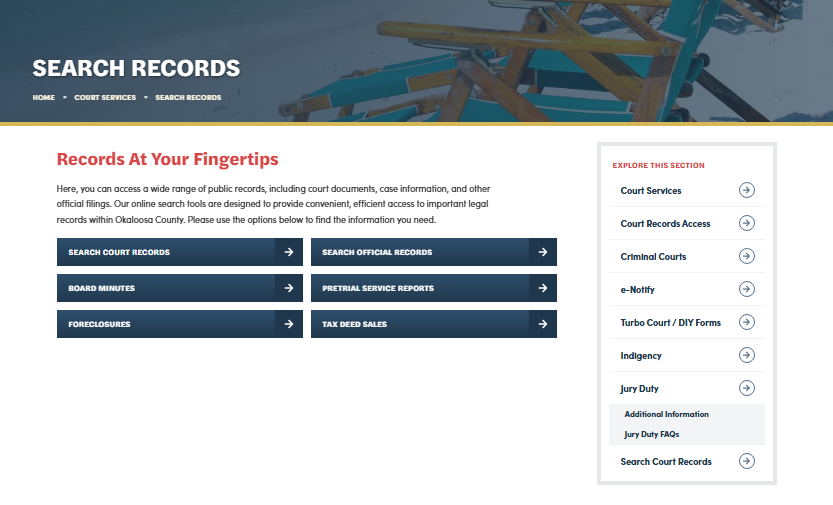
- Select the “Case Search” or “Case Lookup” section
- Enter the full case number
- Choose case type (criminal, misdemeanor, felony)
- Submit a query for instant results
This method shows exact case files tied to one record only.
| Search Type | Input Needed | Result Accuracy |
|---|---|---|
| Name-based search | Full name | Medium |
| Case number search | Case ID number | High |
Court database usage supports faster review of filings, judge notes, and hearing updates. It also reduces duplicate results often seen in name searches.
Clerk System, Record Verification, and Inmate Lookup
The Okaloosa Clerk system stores and manages all criminal court filings. It connects law enforcement reports, court hearings, and sentencing details into one system. This system plays a key role in record verification since it pulls data directly from court filings.
Functions include:
- Storage of criminal case files
- Tracking court system search activity
- Updating hearing outcomes
- Maintaining docket records
Inmate lookup is sometimes linked with criminal records when a person is held in custody. Jail systems may show:
- Booking details
- Charges filed
- Release status
- Bond information
For verification purposes, users often compare clerk data with jail roster entries. This step helps confirm the accuracy of Okaloosa criminal records before using them for reference or review.
How Criminal History in Okaloosa County Works
Criminal history in Okaloosa County forms through a structured legal sequence that starts with an arrest and ends with a court outcome. Each step becomes part of the official record inside county databases and https://okaloosaclerk.com/ state systems. For criminal history in Okaloosa County, records reflect arrest details, court activity, and final case results such as conviction or dismissal. These records stay linked through the court system and case tracking tools.
Timeline of Criminal History in Okaloosa County
Criminal history builds steps through a lifecycle that follows law enforcement and court actions. Each stage adds specific details to the official record.
- Arrest
Law enforcement makes an arrest based on a warrant or an observed offense. Basic information is collected, including charges and personal identification. - Booking
The individual enters the detention process. Fingerprints, photographs, and charge details are recorded. This becomes the first official entry in the criminal record system. - Court hearing
The case moves into the court docket. Hearings review evidence, set bail, and schedule next steps. Case tracking systems log every update tied to the defendant. - Conviction or dismissal
The court delivers a final result. Conviction leads to sentencing records, which may include fines, probation, or jail time. Dismissal closes the case without a conviction.
This lifecycle forms the full criminal history chain:
- Arrest record creation
- Booking data entry
- Court docket updates
- Case resolution outcome
This step-by-step structure is often missed in many public explanations, yet it explains how records grow across different systems over time.
Court System Role, Court Docket, and Case Tracking
The court system in Okaloosa County connects each stage of a case. Every action enters the court docket, which acts as the official timeline of events. Case tracking tools record hearings, motions, and judgments. These records help link arrest data with final court decisions.
Record types include:
| Record Type | Content Included |
|---|---|
| Court docket | Hearing dates, motions, filings |
| Case tracking data | Status updates, procedural steps |
| Sentencing records | Penalties, probation terms, custody outcomes |
These records support consistency across law enforcement, courts, and state databases. They also keep the case history connected from start to finish.
Public vs Sealed Criminal Records
Criminal records in Okaloosa County fall into two main categories: public and sealed. Public records can be viewed through official systems and may show arrest and court outcomes. Sealed records stay restricted by court order. These records are removed from general public view but still exist within restricted legal databases.
Differences include:
- Public records: Arrest data, court docket entries, sentencing outcomes
- Sealed records: Restricted access after legal approval
- Access level: Public systems vs court-authorized review
Sealing often depends on case type, legal outcome, and eligibility rules set by Florida law.
Types of Criminal Records Available
Criminal records in Okaloosa include several record types that show different stages of a case. These records often contain criminal case files, felony records, misdemeanor records, and related legal records maintained by courts and law enforcement agencies. Each type provides specific case details used for background checks, verification, and public record searches.
Felony vs misdemeanor records
Felony records and misdemeanor records differ based on the seriousness of the offense and the legal penalties assigned by the court. Felony records relate to severe offenses such as violent crimes or major theft cases. Misdemeanor records involve less serious violations like minor assaults or traffic-related offenses. Felony criminal case files often include longer sentencing details and may show prison terms exceeding one year. Misdemeanor case files usually reflect shorter penalties such as fines, probation, or county jail time.
Court documents included in both categories may contain:
- Charging documents filed by prosecutors
- Court rulings and sentencing orders
- Case disposition notes
- Probation or supervision terms
| Record Type | Offense Level | Typical Penalty | Case File Content |
|---|---|---|---|
| Felony records | Serious crimes | Prison over 1 year | Full criminal case files, sentencing orders |
| Misdemeanor records | Minor offenses | Jail under 1 year or fines | Court documents, disposition records |
These legal records help clarify how the court classified the offense and what outcome was recorded in official files.
Arrest records vs conviction records
Arrest records and conviction records show different points in the legal process. Arrest records document when a person is taken into custody based on suspicion of a crime. Conviction records confirm that a court found the person guilty or accepted a plea agreement. Arrest-related criminal case files may include booking details, charges at the time of arrest, and law enforcement reports. These records do not always lead to a conviction, so they reflect allegations rather than outcomes. Conviction records focus on court-confirmed results. They often include sentencing information, plea details, and final judgment records issued by the court.
Legal records found in these files include:
- Arrest affidavits and booking sheets
- Court hearing transcripts
- Final judgment entries
- Sentencing and penalty records
These court documents provide a complete timeline from arrest to case resolution, helping distinguish between accusations and confirmed rulings in official case files.
Court Convictions in Okaloosa
Court convictions in Okaloosa refer to official rulings where a court finds a person guilty after reviewing evidence or accepting a plea. These records become part of criminal history data and reflect the final court outcome in a criminal case. For court convictions in Okaloosa, these entries show how a case ended after legal processing.
What a Conviction Record Means in Okaloosa
A conviction record shows that a court has legally determined guilt in a criminal case. It becomes part of permanent criminal history data and may include both misdemeanor and felony offenses. This record is created after a judge or jury delivers a final decision or when a plea is accepted. Conviction records usually contain key details such as case number, offense type, and sentencing records. They may also include penalties like fines, probation terms, or jail time, depending on the severity of the offense. These details help reflect the full court outcome of the case. Unlike arrest records, conviction records confirm the final result of the case. Arrests only show suspicion, while convictions confirm legal responsibility after the judicial process ends.
Charge vs Conviction in Criminal Cases
A charge is an accusation filed by law enforcement or prosecutors. It does not confirm guilt. A conviction happens only after a court decision or a plea agreement.
Differences include:
| Stage | Meaning | Result Type |
|---|---|---|
| Charge | Formal accusation | Case begins |
| Trial or plea | Evidence review or agreement | Case processing |
| Conviction | Court finds guilt | Final court outcome |
Charges may be dropped or dismissed if the evidence is weak. In contrast, convictions remain part of permanent criminal history data unless legally sealed or expunged under state rules.
Common Court Outcomes in Okaloosa Cases
Court cases in Okaloosa typically end in one of several outcomes, depending on evidence and legal negotiations. A guilty verdict means the court found sufficient proof to confirm responsibility. A plea deal happens when a defendant agrees to admit guilt in exchange for reduced penalties or charges. Dismissed cases occur when the court or prosecutor drops the charges due to a lack of evidence or legal issues. Each outcome becomes part of the official court records and shapes how the final criminal history data is recorded. These outcomes directly affect how sentencing records are created and stored. They also determine whether a case results in penalties such as probation, fines, or incarceration.
Impact of Convictions on Records and Legal History
A conviction becomes a permanent entry in a person’s criminal history data unless it is later sealed or expunged under Florida law. It can influence how future court outcomes are reviewed, especially in repeat offense cases. Convictions often appear in background checks used by employers, licensing agencies, and courts. They may also affect sentencing decisions in future cases, as prior history is considered during legal review. In Okaloosa, conviction records remain linked with sentencing records, showing both the offense and the penalty imposed. This creates a long-term legal history that reflects past court decisions and outcomes.
Background Check Using Criminal Records
Background check using Okaloosa criminal records reviews publicly available court and arrest data to confirm a person’s history. Employers, landlords, and agencies use this screening to support record verification and offender search activities.
What a Background Check Means in Okaloosa Criminal Records
A background check refers to a structured review of a person’s records using public data sources. In Okaloosa County, criminal records often form a core part of this process through court filings, arrest logs, and case outcomes. This type of review supports public screening needs across multiple sectors. Okaloosa criminal records may show charges, court actions, and final case decisions. These records help verify identity details and past legal interactions. Many systems use record verification methods to match names, dates of birth, and case numbers for accuracy.
A background check may involve:
- Court case searches for criminal activity
- Arrest history review through public databases
- Offender searches for prior convictions
- Status checks on pending or closed cases
Each search pulls from official sources that document criminal activity within the county. In many situations, employers or housing providers rely on these records to form a clearer profile of an applicant’s history.
How Criminal Records Are Used in Screening
Criminal records from Okaloosa County often support screening processes for employment and rental decisions. Organizations review these records to evaluate past legal issues tied to an applicant.
Uses include:
- Employment screening: Employers review criminal history for roles involving safety, finance, or public contact
- Rental screening: Landlords check records before approving lease agreements
- Contract work checks: Agencies confirm background suitability before assignments
- Identity validation: Matching records with applicant details for consistency
In employment settings, records may influence hiring decisions based on job requirements. In housing situations, landlords may review eviction-linked criminal cases or serious offenses. Each screening process relies on structured offender search systems and verified court data.
FAQs About Okaloosa Criminal Records
Okaloosa criminal records include official court entries that show arrests, charges, and case outcomes within Okaloosa County. These records form part of the criminal history of Okaloosa County files used for identity checks and legal review. Many people review them for record verification or case confirmation needs.
How to check criminal records?
Criminal records in Okaloosa County are checked through court databases, law enforcement systems, and public record searches. A name-based search often pulls related cases from local court filings. Court records access may vary depending on case type and status. Some records show full details, while restricted cases show limited data. Record verification usually confirms charges, case numbers, and outcomes.
Are criminal records public?
Most Okaloosa criminal records are considered public under Florida law and can be reviewed by anyone. These include felony cases, misdemeanor cases, and traffic-related offenses. However, juvenile cases and sealed records remain restricted from public view. Public availability supports background screening and legal verification needs. Criminal history Okaloosa County are often used by employers and agencies for screening purposes.
Can I remove a record?
Certain records may be sealed or expunged if eligibility rules are met. This process may limit public visibility of Okaloosa criminal records during background checks. Common eligibility factors include dismissed cases, not guilty findings, or completed court conditions. A petition must be submitted and reviewed by the court before approval. Once approved, criminal history Okaloosa County entries may no longer appear in standard reports.
What shows in a background check?
Background checks pull data from court records, access systems, and law enforcement databases. They often include arrests, pending charges, convictions, and sentencing details. The depth of information depends on the type of screening requested. Some checks show only recent activity, while others show full criminal history in Okaloosa County records. Record verification helps confirm case status, legal outcomes, and identity-related information.
What information appears in Okaloosa criminal records?
Okaloosa criminal records show official case details linked to arrests, charges, and court outcomes within Okaloosa County. These records form part of the criminal history of Okaloosa County data used for legal review and identity checks. They help confirm what happened in a specific case from start to finish. A typical record may include arrest details, filed charges, and court hearing dates. It may also show bond information, plea entries, and final case results like dismissal or conviction. Record verification often pulls these details from court systems for accurate reporting.