Okaloosa court forms help people complete court filing tasks in Okaloosa County courts. These forms include legal paperwork used for family cases, civil disputes, probate matters, traffic filings, and other court-related requests. Many residents search for Okaloosa court forms before filing a case, responding to court notices, or submitting official records. Most forms are available as PDF downloads, making it easier to print and complete documents before visiting the courthouse. Proper filing forms help court clerks process cases faster and reduce missing information during submission. People often use these downloadable court documents to save time and prepare accurate paperwork for local court procedures.
Legal forms Okaloosa County courts use are part of the official court filing process for many case types. These court documents, which Okaloosa residents often use, include petitions, motions, affidavits, payment forms, and case response paperwork. Many court users look for the correct legal paperwork online to avoid delays during filing. Clear and updated forms help people submit records correctly and follow local court requirements. Some forms require signatures, case numbers, or notarized details before filing with the clerk’s office. Easy-to-use PDF downloads give court users a simple way to review, print, and organize legal paperwork before hearings or court dates.
Okaloosa Court Documents and Filing Basics
Okaloosa court forms help people submit the correct legal paperwork for court cases, record requests, and other legal actions. These official court forms support accurate court filing and help the court process information faster. Many people use Okaloosa County court forms for traffic cases, family matters, civil disputes, probate filings, and public record requests. Each form collects the details the court needs before a case can move forward. Court staff often reject incomplete court submission forms, which may delay hearings or case updates.
Types of Okaloosa County Court Forms
Different courts use different legal templates based on the case type. Some forms are simple requests, while others require detailed case information and signatures.
Court forms include:
- Civil case forms
- Family court paperwork
- Traffic ticket response forms
- Small claims filing forms
- Probate and estate documents
- Court record request forms
- Payment and fee waiver forms
The table below shows how some common forms are used:
| Form Type | Purpose |
|---|---|
| Civil Complaint Form | Starts a civil lawsuit |
| Family Court Petition | Files family-related requests |
| Traffic Court Form | Responds to traffic violations |
| Records Request Form | Requests court documents |
| Fee Waiver Form | Requests reduced filing costs |
Many official court forms follow state court filing requirements. Some forms may not need notarization, signatures, or supporting documents before submission.
Types of Court Forms Available in Okaloosa County
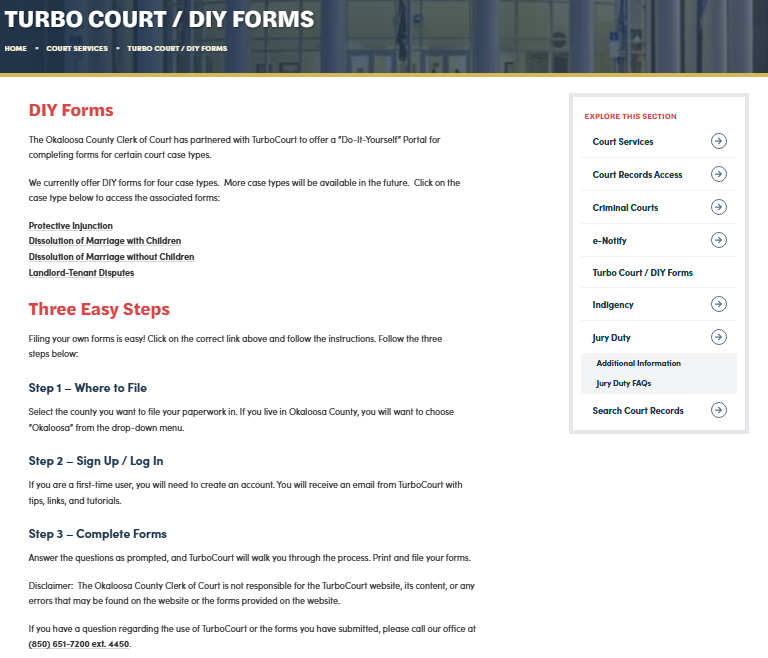
Okaloosa County courts provide many forms for civil, criminal, family, and probate cases. These court documents help people file claims, respond to cases, request hearings, and submit legal paperwork https://okaloosaclerk.com/court-services/diy-forms/ in the correct format. Court forms help organize case records and keep filings consistent across different case types. Many forms ask for details such as names, dates, case numbers, signatures, and supporting documents. Some forms require notarization or filing fees before the court accepts them.
Civil Court Forms
Civil court forms are used for non-criminal disputes between parties. These forms support civil case filing for matters like property disputes, contract claims, small claims cases, landlord issues, and money recovery requests.
Civil court forms include:
- Complaint forms
- Summons paperwork
- Civil cover sheets
- Motion forms
- Statement of claim documents
- Notice of hearing forms
Many people use civil filing forms to start a lawsuit or respond to one already filed. A complaint form usually explains the issue and lists the requested outcome. A summons paperwork packet informs the other party about the case and court deadlines.
| Civil Form Type | Main Purpose |
|---|---|
| Complaint Form | Starts a civil lawsuit |
| Summons Form | Notifies the opposing party |
| Motion Form | Requests court action |
| Small Claims Form | Files lower-value disputes |
| Notice of Hearing | Shares court hearing details |
Civil forms often require clear facts, correct dates, and supporting records. Missing information can delay the filing process or cause rejection by the clerk’s office.
Criminal Court Forms
Criminal court forms support cases involving criminal charges, court motions, probation requests, and sworn statements. These forms help courts process criminal paperwork in an organized way.
Criminal court forms include:
- Arrest-related paperwork
- Court motion forms
- Plea documents
- Bond request forms
- Affidavit forms
- Probation modification requests
A motion form allows a party to request action from the court, such as changing a hearing date or reviewing conditions of release. Affidavit forms contain sworn statements that must be signed under oath.
Family Court Forms
Family court forms cover legal matters involving marriage, children, and domestic relationships. These forms support cases related to divorce, parenting plans, custody arrangements, and financial support.
Popular family court forms include:
- Divorce forms
- Custody paperwork
- Parenting plan forms
- Domestic violence petitions
- Child support forms
- Name change requests
Family cases often require financial disclosures and signed parenting documents. Child support forms may ask for income records, insurance details, and childcare costs. Custody paperwork usually outlines parental responsibilities and visitation schedules.
Probate Court Forms
Probate forms handle estate matters after a person passes away or becomes unable to manage personal affairs. These forms help courts review wills, appoint guardians, and manage estate transfers.
Probate forms include:
- Estate paperwork
- Guardianship forms
- Probate petitions
- Will deposit forms
- Executor appointment forms
- Probate filing documents
Guardianship forms are often used for minors or adults needing legal care and support. Probate filing documents may include asset lists, death certificates, creditor notices, and court petitions.
| Probate Form | Purpose |
|---|---|
| Petition for Administration | Opens a probate case |
| Guardianship Form | Requests legal guardianship |
| Estate Inventory | Lists estate assets |
| Creditor Notice | Alerts creditors about the estate |
| Will Filing Form | Submits a will to the court |
Accurate estate paperwork helps the court process probate matters more efficiently. Many probate cases require certified records and signed legal documents before approval.
How to Download Okaloosa Court Forms
Okaloosa court forms are available on the official county court and clerk websites as downloadable PDFs. Most forms can be opened online, saved to a device, and printed for filing or personal record use. People searching for downloadable court forms often need fast document retrieval for filing deadlines, hearings, or record requests. The Okaloosa clerk forms section usually includes civil, family, probate, traffic, and small claims paperwork. Many pages offer direct PDF downloads, which makes the process simple for users on desktop or mobile devices.
Online Forms Access and PDF Downloads
Most courts provide online forms access through searchable form directories. Users can select a form category, open the file, and save it directly to a computer or phone. Many forms appear as fillable PDFs, which helps users complete paperwork before printing.
Steps include:
- The official Okaloosa County court or clerk form page
- Choose the needed case type or legal category
- Open the downloadable PDF file
- Save the document for later use
- Print and complete the form if required
Popular printable legal forms often include:
- Traffic citation response forms
- Small claims paperwork
- Family court petitions
- Probate filing documents
- Record request forms
- Payment-related forms
Many browsers open PDF files automatically. If the form does not load, users can download a free PDF reader to view the document correctly.
Common Requirements for Court Documents
Most court documents in Okaloosa County require signatures, valid identification, copies of paperwork, and payment of filing fees. Many forms must include notarized signatures and supporting documents before the clerk accepts the filing. Court staff often review court documents that Okaloosa residents submit for missing information. A small mistake can delay a hearing or cause the legal paperwork to be returned for correction. For that reason, filers usually check every section before submission.
Signatures and Notary Rules
Many legal filing forms require signatures from all parties involved in the case. Some family law, probate, and property-related papers need a notary seal. A notary confirms the identity of the signer and helps prevent false statements.
Examples of notarized forms include:
- Affidavits
- Sworn statements
- Financial disclosures
- Guardianship paperwork
- Property transfer forms
Courts may reject unsigned documents. A missing notary stamp can create delays during processing.
Identification and Supporting Documents
Filers often provide a government-issued photo ID when submitting paperwork in person. Courts may request extra records to support the filing.
Typical supporting documents include:
- Driver’s license or state ID
- Previous court orders
- Proof of address
- Marriage or birth certificates
- Financial records
Clear and readable copies help court staff process forms faster.
Copies and Filing Fees
Most courts ask for the original form plus extra copies for court records and other parties. Some filings require two or more copies, depending on the case type.
The table below shows common filing needs:
| Requirement | Purpose |
|---|---|
| Signed forms | Confirms legal approval |
| Copies of paperwork | Keeps records for all parties |
| Filing fees | Covers court processing costs |
| Supporting documents | Verifies claims in the case |
| Valid ID | Confirms filer identity |
Filing fees vary by case category. Traffic, civil, probate, and family court filings often have different payment amounts. Some courts accept fee waiver requests for people with limited income.
Benefits of Using Official Court Forms
Official court forms help filers submit approved documents that match court filing standards. These forms reduce errors, improve court compliance, and help cases move through the system more smoothly. Using the correct official court forms gives filers a clear format accepted by the court. Many forms already contain the required legal language, case sections, and signature areas. This structure lowers the chance of incomplete submissions.
Better Accuracy and Court Compliance
Approved forms support accurate filing. They often include instructions for dates, signatures, case numbers, and supporting paperwork. Court clerks can review these forms faster since the layout follows standard court requirements.
Benefits of approved documents include:
- Fewer missing sections
- Better court compliance
- Correct formatting
- Clear filing standards
- Easier record processing
Courts often reject altered or unofficial paperwork. Official forms help reduce that risk.
Faster Processing and Fewer Filing Errors
Many people use legal filing forms to avoid delays caused by incomplete information. A properly completed form helps clerks process records without repeated corrections.
Official paperwork can support:
- Faster case review
- Better document tracking
- Lower risk of rejected filings
- Clear communication between parties
Court websites often provide downloadable PDF forms for civil, family, probate, and traffic cases. Using current versions helps filers meet updated filing standards and court rules.
Common Mistakes When Completing Court Forms
Many court forms get rejected because people miss signatures, enter incorrect details, or submit the wrong paperwork. Small court paperwork mistakes often delay a case, create filing errors, or lead to incomplete filings that require legal corrections later. Court forms require accurate details from start to finish. A missing date, wrong case number, or blank section can stop the filing process. Many courts review forms before accepting them, so rejected forms are common when the paperwork does not match court requirements.
People often rush through documents without checking instructions. As a result, clerks may return forms for correction. Careful review helps reduce delays and avoids extra filing fees in some cases.
Missing Signatures and Incomplete Filings
Unsigned documents remain one of the most common filing errors. Courts usually require signatures on petitions, motions, affidavits, and financial statements. Some forms even require notarization.
Problems include:
- Missing signatures from one party
- Unsigned witness sections
- Skipped notarization fields
- Blank pages left incomplete
- Missing attachments or supporting records
A court clerk may reject incomplete filings right away. In some situations, the court may pause the case until corrected paperwork arrives.
| Common Error | Possible Result |
|---|---|
| Missing signature | Rejected forms |
| Blank information fields | Filing delay |
| Missing documents | Incomplete filings |
| Wrong case number | Processing errors |
(FAQs) About Okaloosa Court Forms
Okaloosa court forms help people complete legal paperwork for many court-related matters in the county. Many Okaloosa court forms are offered as PDF forms, making it easier to complete and submit paperwork from home.
How can someone download Okaloosa court forms?
Many Okaloosa court forms can be downloaded online through the county court and Florida court websites. Most forms are available as printable PDFs that users can save directly to their phones or computers before completing the paperwork. Court websites usually organize forms by category, including family law, civil cases, probate, traffic matters, and small claims filings. Some forms allow typed entries before printing, which helps reduce mistakes during filing paperwork. Users should read all instructions attached to the form before submission, since missing information may delay the court process or lead to rejected paperwork.
Are Okaloosa court forms available online?
Yes, many legal forms that Okaloosa County residents need are available online for public use. Court websites often provide downloadable forms for divorce cases, child support requests, probate filings, eviction cases, and traffic matters. Online forms help people prepare documents without having to visit the courthouse at every step of the process. Many pages include filing instructions, fee details, and court submission information along with the forms. Some restricted case documents may still require in-person requests through the Clerk of Court’s office, depending on the type of legal matter involved.
What types of legal forms are available?
The court system offers many types of court documents that Okaloosa residents may need during legal proceedings. Common forms include family law paperwork, civil court filings, probate petitions, name change forms, eviction notices, traffic forms, and criminal record requests. Many people use these forms for divorce cases, custody matters, estate administration, or small claims disputes. Most downloadable forms contain written instructions that explain signatures, deadlines, filing fees, and required supporting documents. Using the correct legal form helps reduce processing delays and supports smoother court submission procedures.
Do court forms require notarization?
Some court forms require notarization before filing, especially forms containing sworn statements or affidavits. Probate paperwork, family law documents, and financial affidavits commonly need a notary public witness before submission. A notary verifies identity and confirms that the signature was completed willingly by the person signing the document. Banks, shipping stores, legal offices, and courthouse locations may provide notary services for completed paperwork. People should avoid signing documents too early since many notarized forms must be signed in front of the notary during the appointment.
Can court forms be filed electronically?
Many Florida court systems now allow electronic filing for approved case types and legal documents. Electronic filing lets users upload completed forms online instead of delivering paper copies directly to the courthouse. This process helps with faster court submission, document tracking, and remote filing from home or work. Some filings still require physical copies, identification checks, or supporting paperwork before final acceptance by the court clerk. Filing fees may apply during online submission, and users should confirm that their selected forms qualify for electronic filing before uploading documents.